Parchment Envelope Wax Seal Applique
First Impressions: A Nostalgic Whisper, Not a Shout
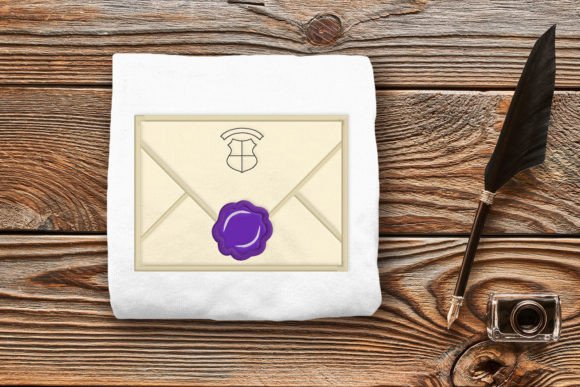
When I opened the Parchment Envelope Wax Seal Applique, what struck me wasn’t flash—it was quiet intention. This isn’t a bold monogram or a playful cartoon; it’s a delicate nod to handwritten correspondence, heirloom stationery, and the tactile weight of a sealed letter. The envelope shape is clean and slightly elongated, with soft curved flaps and just enough line work to suggest folded paper—not too literal, not too abstract. The wax seal sits centered and proud, rendered in satin stitch for that subtle sheen, while the crest inside adds just enough heraldic charm without tipping into clutter. It feels like something you’d find tucked into a vintage desk drawer—thoughtful, timeless, and quietly confident.
Real-World Use: Where This Design Earns Its Keep
Last week, I stitched the Parchment Envelope Wax Seal Applique onto a natural linen tote bag for a small boutique launching their Back To School collection. The client wanted “elegant but approachable”—no cutesy apples or chalkboards. We placed it low on the front panel, offset slightly to the left, and used ivory thread on oat-colored fabric. The result? Instant sophistication. Customers paused at the display—not because it screamed, but because it invited closer looking. That’s the power of this design: it elevates handmade product without overwhelming it.
I’ve also tested it on baby onesies (in the 3-inch size), cotton tea towels, and structured twill aprons. On soft knits, I added light tear-away stabilizer beneath and a topping for smooth satin stitch definition—critical where the wax seal meets the envelope edge. On textured fabrics like burlap or heavy canvas, I scaled up to the 4.5-inch version; the smaller sizes lost clarity in the weave. For sweatshirt embroidery, I avoided the shoulder seam entirely—the curve distorted the envelope’s symmetry—and instead centered it cleanly on the chest.
Where Caution Lives: Fabric, Fit, and Function
This isn’t a one-size-fits-all machine embroidery design. On thin or stretchy fabric—like lightweight jersey or rayon challis—the fill stitch density around the seal can cause puckering if stabilizer isn’t precisely matched. I recommend testing the Parchment Envelope Wax Seal Applique on scrap first, especially when using dark fabric: the satin stitch wax seal needs contrast to read clearly, and some thread brands dull on charcoal or navy. On caps or curved surfaces, the design’s flat geometry doesn’t wrap well—skip it for baseball hats unless you’re willing to digitize a custom adaptation.
Also note: in the smaller sizes, the wax seal is fully embroidered—not appliquéd. That means fine detail relies entirely on stitch precision. If your machine struggles with tight satin columns under 4mm wide, consider sticking to the 4-inch+ versions for commercial embroidery projects where consistency matters.
What It Adds to Your Finished Product—Beyond Stitching
Customers don’t buy stitches—they buy meaning. The Parchment Envelope Wax Seal Applique signals care, personalization, and intention. On a personalized gift—say, a monogrammed pillow cover for a teacher’s lounge—it subtly reinforces the idea of “a note just for you.” For Etsy sellers and craft fair vendors, it helps differentiate from mass-produced alternatives. I’ve seen buyers linger longer on listings featuring this design in printable mockups, especially when styled with vintage ink bottles and parchment paper backgrounds. It builds trust: it says, “This isn’t generic—it’s curated.”
For small shop product branding, it works beautifully as a subtle logo accent—embroidered on the hem of a kitchen towel or the corner of a notebook sleeve. It’s not loud enough to dominate, but distinct enough to become recognizable over time. And yes—it boosts giftability. A holiday embroidery project using this design feels more like a keepsake than a seasonal throwaway.
Designer Notes You’ll Actually Use
- Always test the Parchment Envelope Wax Seal Applique on scrap fabric matching your final project’s weight and stretch.
- Check thread color contrast early—especially if stitching on black, deep green, or heather gray fabric.
- Review stitch density before hooping: high-density areas (like the wax seal’s inner crest) may need extra stabilizer support on lightweight materials.
- Confirm hoop size compatibility—some versions may require a 5x7 hoop minimum, depending on scaling.
- Inspect small details at actual stitch-out size: tiny flourishes in the crest won’t translate well below 3 inches.
- Test in black-and-white mockups to assess silhouette strength—this design relies heavily on shape, not color.
- Use proper cut-away or tear-away stabilizer based on fabric texture—not just thickness.
- Verify licensing terms before selling finished items or bundling the digital embroidery file with other design assets.
Final Thought: A Quiet Anchor in a Noisy Market
In an era of fast trends and algorithm-driven designs, the Parchment Envelope Wax Seal Applique stands out by refusing to shout. It’s not flashy—but it’s memorable. It doesn’t chase virality, yet it earns repeat use across baby embroidery, holiday embroidery, boutique apparel, and personalized gifts. For craft business owners and Etsy sellers building long-term brand identity, this is the kind of embroidery file that becomes a quiet anchor: reliable, refined, and ready to carry meaning—not just thread.